viernes, 14 de enero de 2011

How draw manga?


When you are drawing manga, you need to have a lot of things in mind. The basic things, you need to know are the typical eyes, the shape of face, the nose, the mouth and the hair. There are a lot of different types of eyes, mouth and hair. Usually, it is drawn with Photoshop, with a plate but normally only professionals do it.

Types of eyes

Types of nose


Types of mouth

Types of hair

Types of ears

lunes, 3 de enero de 2011

Logical connective

In logic, a logical connective is a symbol used to connect two or more sentences in a grammatically valid way, such the compound sentence produced has a truth value dependent on the respective truth values of the original sentences.
Each logical connective can be expressed as a function, called a truth function. For this reason, logical connectives are sometimes called truth-functional connectives. The most common logical connectives are binary connectives which join two sentences whose truth values can be thought of as the function's operands.
Logical connectives along with quantifiers are the two main types of logical constants used in formal systems such as propositional logic and predicate logic.

TYPES


Negation (not) (¬ or ~)

Negation is an operation on one logical value, trypically the value of a proposition, that produces a value of true when its operand is false and a value of false when its operand is true.

Truth table of ¬p

p ¬p
True False
False True

Conjunction (and) (\wedge, &, or · )

Conjunction is an operation on two logical values, trypically the values of two propositions that produces a value of true if and only if both of its operands are true.

Truth table of p^q
p q pq
T T T
T F F
F T F
F F F
Disjunction (or) (\vee or )

Disjunction is an operation on two logical values, typically the values of two propositions, that produces a value of false if and only if both of its operands are false.

Truth table of p∨q
p q pq
T T T
T F T
F T T
F F F
Implication (if...then) (\rightarrow, \Rightarrow or \supset)

Implication and conditional are both associated with an operation on two logical values, typically the values of two propositions, that produces a value of false just in case the first operand is true is true and the second operand is false.

Truth table of pq
p q pq
T T T
T F F
F T T
F F T
Biconditional (if and only if) (\leftrightarrow )

Biconditional is an operation on two logical values, typically the values of two logical values, typically the values of two propositions, that produce a value of true if and only if both operands are false or both operands are true.

Logical gate

A logic gate perfoms a logical operation on one or more logic inputs and produces a single logic output. Logic gates are primarily implented electronically using diodes or transistors, but can also be constructed using electromagnetic relays, fluidic logic, pneumatic logic, optics, molecules, or even mechanical elements.

TYPES

Type Distinctive shape Rectangular shape Boolean algebra between A & B Truth table
AND
AND symbol AND symbol A \cdot B
INPUT OUTPUT
A B A AND B
0 0 0
0 1 0
1 0 0
1 1 1
OR
OR symbol OR symbol A + B
INPUT OUTPUT
A B A OR B
0 0 0
0 1 1
1 0 1
1 1 1
NOT
NOT symbol NOT symbol \overline{A}
INPUT OUTPUT
A NOT A
0 1
1 0

NAND
NAND symbol NAND symbol \overline{A \cdot B}
INPUT OUTPUT
A B A NAND B
0 0 1
0 1 1
1 0 1
1 1 0
NOR
NOR symbol NOR symbol \overline{A + B}
INPUT OUTPUT
A B A NOR B
0 0 1
0 1 0
1 0 0
1 1 0

XOR
XOR symbol XOR symbol A \oplus B
INPUT OUTPUT
A B A XOR B
0 0 0
0 1 1
1 0 1
1 1 0
XNOR
XNOR symbol XNOR symbol \overline{A \oplus B} or {A \odot B}
INPUT OUTPUT
A B A XNOR B
0 0 1
0 1 0
1 0 0
1 1 1

martes, 21 de diciembre de 2010

Truth table

A truth table is a mathematical table used in logic to compute the functional values of logical expressions on each of their functional arguments, that is, on each combination of values taken by their logical variables.

In particular, truth tables can be used to tell whether a propositional expression is logically valid.

A truth table is composed of one column for each input variable and one final column for all of the possible results of the logical operation that the table is meant to represent.

Each row of the truth table therefore contains one possible configuration of the input variables, and the result of the operation for those values.


martes, 14 de diciembre de 2010

Physical differences between Japanese, Chinese and Koreans

The principal diferencies between japanese, chinese and Korean are in the eyes and in the nose.

JAPANESE


The eyes of the japanase have the part lower almost horitzontal.
The nose is straight and in the majority is small.

CHINESE


The eyes are slanted up and the majority are round.
The chine have the a small and wide nose.

KOREAN


Their eyes are smaller and if you look carefully at the bottom is different, besides his eyes are more slanted than the Japanese and Chinese
Her nose is like the Chinese, a small and wide

Japanase alphabet

The Japanese writing was born from the Chinese writing, than was carried to Japan with Corea, in the sigle IV. The Japanese writing has there sistems for writing and one for transcription.

  • Hiragana
  • Katakana
  • Kanji
  • Rômanji
The hiragana

It usually write the words own the Japanase onomatopoeia produced by living organisms.

The katakana

It usually write the words for write phonetically words with foreign origin. Also it use for write onomatopeias and, in the form figurative, for enfatize the words. when it want call the attention.

The kanji

Kanji are the sinograms in the Japanese writing. The Kanjis are utilize in the majory for express only concepts, to diference for chinese, when can are also utilize in its caracter phonetically. However, also exist combinations of kanjis than doesn't obey its original significate and than only put for its phonetic value. To this combinations are called "ateji".

The rômanji

The Japanese use the roman alphabet. The rômanji are utilitzing for names of marcs or companies and also for write international acronyms. In the românji has diferent sistems of romanitzion, which the most know is the Hepburn, but the Kunrei-shiki is the official in Japan.


viernes, 19 de noviembre de 2010

Mimzy beyond imagination


SYNOPSIS

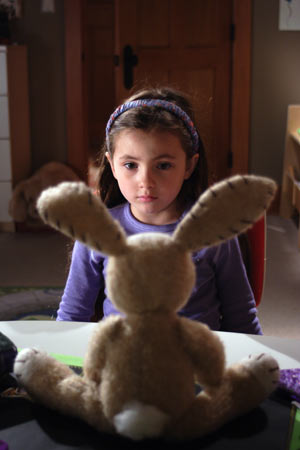
La película relata la vida de dos niños que descubren una misteriosa caja con dispositivos extraños que ellos confunden con juguetes
A medida que los niños juegan con estos “juguetes,” comienzan a mostrar niveles cada vez más elevados de inteligencia. El profesor de los chicos informa a sus padres que parecen estar convirtiéndose en genios. Los padres también se percatan de que algo extraordinario está sucediendo. Emma, la más joven de los dos hermanos, le dice a su confundida madre que uno de los juguetes, un conejo de peluche, parece llamarse Mimzy y que “le enseña cosas”. Pronto la situación comienza a estar fuera de control. Cuando Emma advierte que Mimzy les trae un mensaje muy serio desde el futuro, todos se dan cuenta de que están frente a algo realmente increíble.


OPINION


Mizmy beyond imagination is a powerful film imaginative special effects which give life to an entertaining story for children and where adults will also find a space without falling into extreme drowsiness. It runs on flat surfaces where fantasy takes first place as the child protagonist, as seems to force a Christmas release.

It is also why all meant to be a showcase of good intentions. So the future is a throwback to the hippies of the sixties, where people walk on green and flowery meadows holding hands, a kind of neoliberalism last thread that flies in the face after the appearance of the company leading the new conception of the world (the microchips in charge of creating the toys belong to the powerful multinational Intel, often disappointed).

However, we can not forget that Mizmy, the rabbit responds to a formula endlessly repeated in any product intended for a young audience and as such, it achieves its purpose by keeping children quietly during the screening.

I really liked this movie.
I first saw the book and now I've seen the movie. I acknowledge that the book is much better than the movie.